By Trevor Cameron / The Golfing Gardener
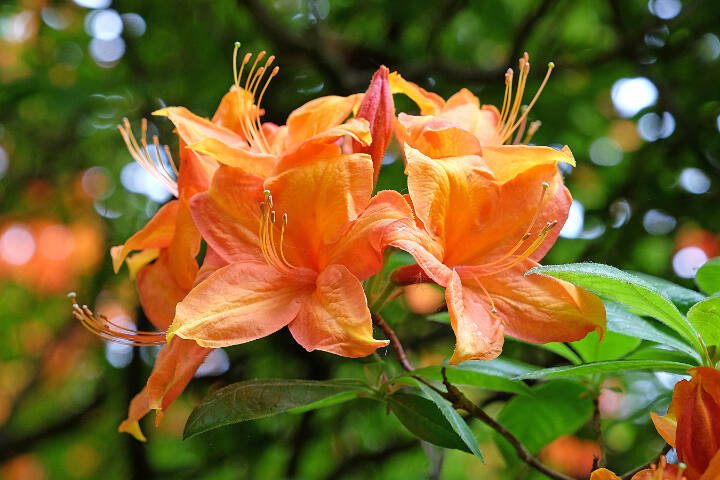
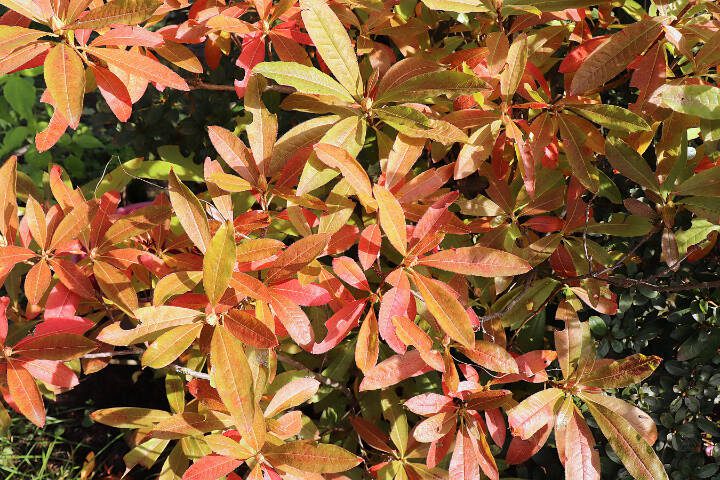
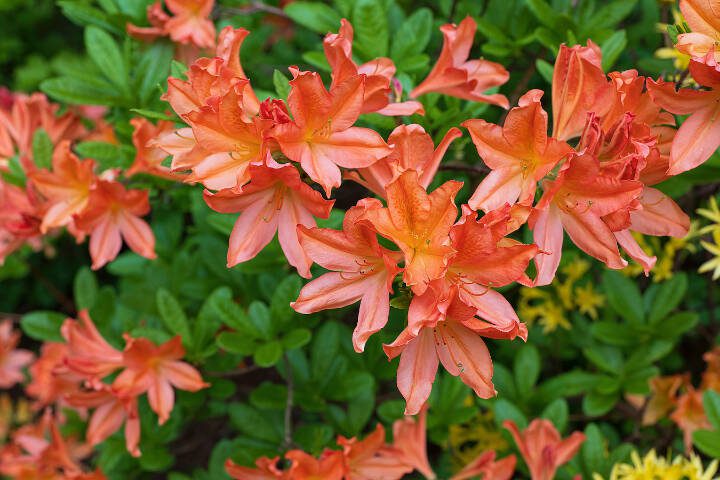
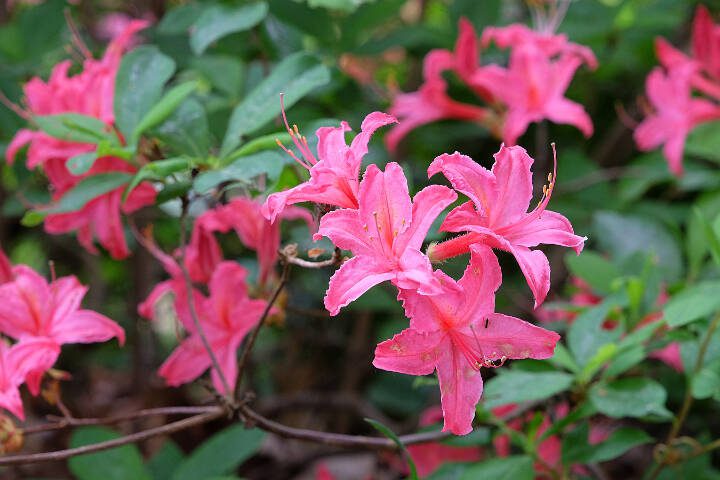
We gardeners have plenty of evergreen options to help with our azalea and rhododendron addictions, but a deciduous azalea specimen offers a different look with brighter, more colorful flower options, fragrance on many cultivars and, of course, spectacular fall colors as they go dormant before winter.
Many gardeners refer to deciduous azaleas as “exbury” azaleas, which is partially true. Exbury azaleas are absolutely one type of deciduous azalea, but other species, hybrids and varieties as well. Gardeners can find some 17 species that are native to North America alone. Many of these species as well as exbury types have been used in breeding for centuries, and worthy selections have resulted, giving us many of the named cultivars we use today.
Our Pacific Northwest native is the Western azalea (rhododendron occidentale), which is lovely in the wild, fragrant and has served as parentage for many other varieties. Other fun species to search for in our area include rhododendron schlippenbachii, rhododendron viscosum, rhododendron mollis and rhododendron luteum — all great growers in the Pacific Northwest with fun spring flowers and excellent fall color.
Just like their rhododendron and evergreen azalea brethren, deciduous flavors of azalea love our acidic soil, spring rains and mild maritime climate. One important difference between deciduous azaleas and typical rhododendrons is that they like some mulch, but not as much — avoid burying the crown of these plants. They are easy to cultivate in sun or part shade, in almost any garden setting. Feed them twice a year, once in March and again in June, with an organic rhododendron/acid-type fertilizer, which will provide for optimum growth and flower. I sprinkle a little Ultra Bloom from E.B. Stone under mine every June, maximizing the bud set for the next season. Remember, a well-fed plant will reward you with superior flower power; one that is struggling simply will not.
Deciduous azaleas set their flower buds over the summer to open up the following spring, so prune them only after they bloom. If you cut them back in summer, fall or winter, you will be cutting off your flowers for the next year.
Also, if you don’t feed them properly or you allow your plant to become drought-stressed in the summer, they will abort bud production and offer an inferior flower show the following spring. Removing dead wood or tidying the structure over winter is perfectly fine, but absolutely avoid tipping or shearing back these plants. In my opinion, you should let these beauties mature naturally, using them in the background of the garden to provide height. Pruning sparingly will allowing them to achieve a nice open, natural look versus the sheared little meatball-looking plant.
Now, let’s get to the proverbial elephant in the room: powdery mildew. Most gardeners I talk to are worried about mildew on this type of azalea, but honestly this can be kept to a minimum or avoided very easily. The more sun and air circulation it has, the less mildew it will have, simple as that, with all plants. Crowding these with other shrubs is not necessary, nor is planting them in deep shade. If we site them in a sunny garden, with at least half a day of sun, and give them proper room to grow, I highly doubt you will have to battle mildew regularly. I can only use myself as an example, and I have had stunning orange deciduous azaleas (Arneson Gem) in my front rockery garden for over 15 years in full sun and have never had an issue with mildew or anything of the like. If I had let the neighboring plants go crazy and bury it, perhaps I would be singing a different tune.
Now let’s talk some of the best flavors of deciduous azalea, and some quick attributes of each. Remember to always check individual varieties for height, spread, bloom time and fragrance.
Weston azaleas: This group blooms much later, from June into early July. They are super fragrant and have honeysuckle-like flowers that are simply fabulous. Varieties include Popsicle, Lemon Drop and Innocence.
Arneson azaleas: This Oregon breeder produced some fabulous compact and mildew-resistant options with great color. Seek out Arneson Gem, Arneson Ruby and Arneson Golden Solitaire. These have no fragrance, but the colors are vivid and the flowers are large.
Irene Koster: This specific Western azalea hybrid is perfect with its pink to white flowers and pleasing fragrance every spring. We have one of these on our grounds here and it is a most worthwhile choice for the home gardener.
Fragrant Star: This hybrid has nice bluish-green foliage and extremely fragrant, pure white flowers, growing with a nice and compact shape. It’s one of my favorites, for sure. Who says white has to be boring?
Gibraltar: I have been doing this for 30 years and every single year without exception this is the most popular choice with nursery patrons. Want a neon, true-orange flower? Then this one is for you.
Klondyke: Still the standard for the brightest, pure golden-yellow flower anywhere. Another popular choice with nursery patrons, this flavor is sure to make you smile every spring with its darker new growth and bright flower color.
Lights azaleas: This series comes to us from the University of Minnesota and Bailey Nursery’s First Editions Shrub Program. They are super hardy, compact and heavy blooming. Lots of colors are available, but typically Electric Lights, Double Pink, Electric Red, Tangerine Lights and Mandarin Lights are available at garden centers.
I am hoping you will consider a deciduous Azalea or two for your home landscape. They absolutely make wonderful specimens, and when planted properly will give you years of garden enjoyment. Remember, not everything has to be “evergreen” in the Evergreen State; some of the best plants are deciduous, which will add some fun autumn color into your landscape year after year.
Free classes
Sunnyside Nursery in Marysville will host “Rockin’ Rhodies & Azaleas” at 10 a.m. on Saturday, April 27, followed by the annual Rhododendron Truss Show from 10 a.m. to 2 p.m., and “Successful Shade Gardens” at 10 a.m. on Sunday, April 28. For more information or to sign up, go to www.sunnysidenursery.net/classes.
Trevor Cameron is a certified professional horticulturist (CPH) and serves as general manager for Sunnyside Nursery in Marysville. He can be reached at sunnysidenursery@msn.com.
Talk to us
> Give us your news tips.
> Send us a letter to the editor.
> More Herald contact information.
Gallery